Best Cycling Bottles
Whether you’re riding through city streets, climbing mountain trails, or training for a long-distance race, staying hydrated is essential for both performance and safety. A high-quality cycling bottle isn’t just another accessory—it’s one of the most important pieces of cycling gear you can own.
The best cycling bottles are lightweight, easy to squeeze, leak-resistant, and designed to fit securely into standard bike bottle cages. With dozens of options available, choosing the right one can feel overwhelming.
This comprehensive guide explains everything you need to know about the best cycling bottles, including their types, materials, advantages, disadvantages, essential features, and buying tips to help you make an informed decision.
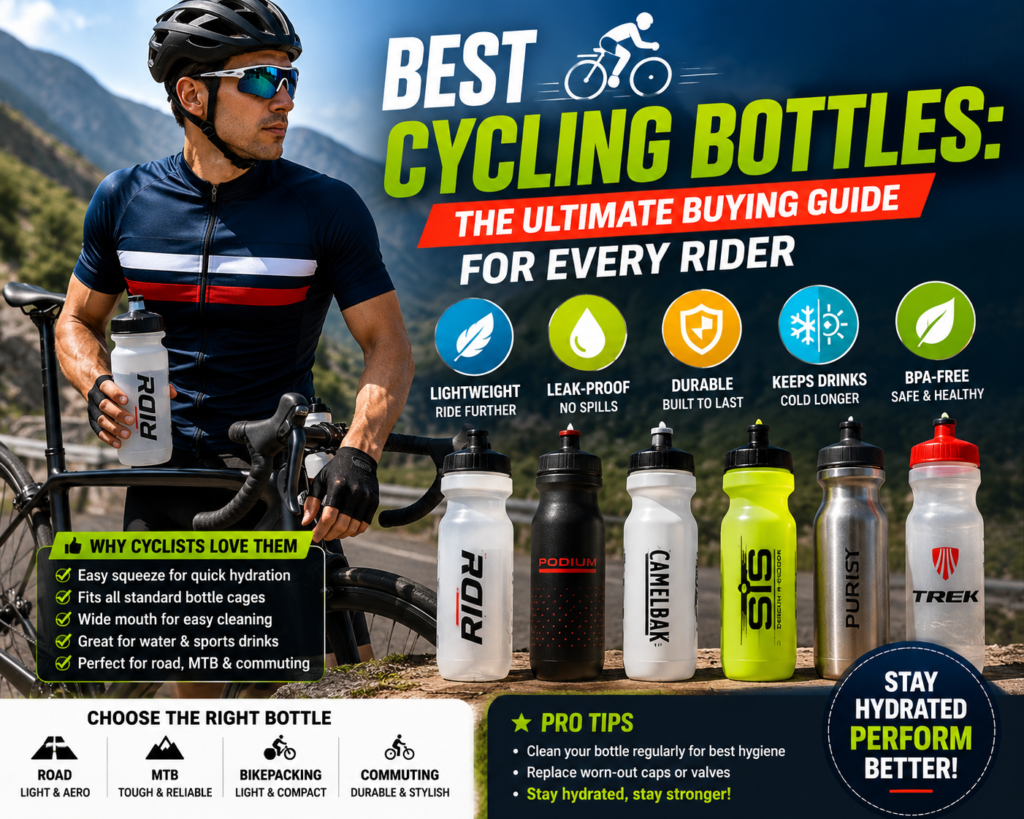
Why Choosing the Best Cycling Bottle Matters
Cycling causes your body to lose water through sweat, especially during long rides or hot weather. Even mild dehydration can reduce endurance, concentration, and overall performance.
A quality cycling bottle helps you in:
- Staying hydrated during rides
- Improving endurance
- Maintaining energy levels
- Preventing fatigue
- Reducing muscle cramps
- Keeping drinks fresh and clean
Unlike ordinary water bottles, cycling bottles are specifically designed for one-handed use while riding.
Types of Cycling Bottles
1. Plastic Cycling Bottles
Plastic cycling bottles are the most common option among cyclists because of followings. These are
- Lightweight
- Affordable
- Easy to squeeze
- Fits most bottle cages
- Available in many sizes
These bottles are ideal for road cyclists and everyday riders.
2. Insulated Cycling Bottles
Insulated bottles use double-wall construction to keep beverages cool for longer periods.
Best For
- Summer rides
- Long-distance cycling
- Gravel riding
- Endurance events
Cold water stays refreshing even during hot weather.
3. Stainless Steel Cycling Bottles
Stainless steel bottles offer exceptional durability and better temperature retention.
Benefits
- Rust-resistant
- BPA-free
- Eco-friendly
- Doesn’t retain odors
- Long lifespan
Although heavier than plastic bottles, they’re an excellent investment for regular riders.
4. Collapsible Cycling Bottles
Some cyclists prefer collapsible bottles for bikepacking and adventure riding.
These bottles occupy less space after use and are lightweight but generally lack insulation.
Key Features to Look For
Lightweight Design
Weight matters when cycling.
A lightweight bottle minimizes extra load while maximizing comfort during long rides.
Easy-Squeeze Body
Most cycling bottles are made with flexible materials that allow riders to drink without removing the cap.
This feature makes hydration safer while riding.
Leak-Proof Cap
A quality cycling bottle should prevent leaks, even on rough roads or mountain trails.
Look for:
- Secure valve systems
- Tight-threaded caps
- Spill-resistant nozzles
BPA-Free Materials
Choose bottles made from BPA-free plastic or food-grade stainless steel to ensure safe drinking water.
Wide Opening
Wide-mouth bottles have several advantages:
- Easy cleaning
- Quick refilling
- Ice cube compatibility
- Convenient mixing of electrolyte drinks
Bottle Cage Compatibility
Always use such bottle which fits your bike’s standard bottle cage.
Most cycling bottles are available in:
- 20 oz
- 21 oz
- 24 oz
- 26 oz
Pros of the Best Cycling Bottles
1. Convenient Hydration
Cycling bottles allow riders to drink while keeping one hand on the handlebars, improving safety and convenience.
2. Lightweight
Most bottles are specifically engineered to minimize weight without compromising durability.
3. Durable Construction
Modern cycling bottles withstand drops, vibration, and everyday use.
Premium models often last for several years.
4. Eco-Friendly
Reusable bottles help reduce plastic waste while saving money on disposable bottled water.
5. Easy Cleaning
Many modern bottles are with removable valves and wide openings that simplify cleaning.
6. Temperature Control
Insulated models keep beverages cool for several hours during long rides.
7. Comfortable Grip
Textured surfaces improve grip even when wearing cycling gloves.
Cons of Cycling Bottles
1. Plastic May Absorb Odors
Lower-quality plastic bottles can retain odors from sports drinks.
Food-grade materials help minimize this issue.
2. Insulated Bottles Are Heavier
Double-wall insulation improves temperature retention but adds extra weight.
Competitive cyclists often prefer lightweight plastic options.
3. Frequent Cleaning Required
Sports drinks and electrolyte mixes should not remain inside bottles for extended periods.
Daily cleaning helps prevent bacteria and unpleasant odors.
4. Valve Wear
After extensive use, bite valves or squeeze nozzles may wear out and require replacement.
5. Limited Insulation in Basic Models
Standard plastic bottles keep drinks cool only for a short period.
Plastic vs Stainless Steel Cycling Bottles
FeaturePlasticStainless Steel
Weight Very Light Heavier
Cost Lower Higher
Insulation Limited Excellent
Durability Good Excellent
Odor Resistance Moderate Excellent
Eco-Friendly Good Excellent
Best For Racing, Daily Rides Touring, Commuting, Adventure
How to Choose the Best Cycling Bottle
Choose the Right Capacity
- 20 oz: Short rides
- 24 oz: Medium rides
- 26–30 oz: Long-distance cycling
Consider Your Riding Style
Road Cycling
- Lightweight bottles
- Easy squeeze
- Aerodynamic design
Mountain Biking
- Leak-proof
- Durable construction
- Secure bottle cage fit
Commuting
- Insulated bottles
- Stylish appearance
- Easy cleaning
It is better to look for Easy Cleaning
Removable valves and wide openings reduce cleaning time.
Choose BPA-Free Materials
Safety should always be a priority when selecting a reusable water bottle.
Maintenance Tips
Proper care extends your bottle’s lifespan.
Daily
- Wash with warm water and mild soap.
- Rinse thoroughly.
- Air dry completely.
Weekly
- Clean the nozzle thoroughly.
- Use a bottle brush.
- Remove stubborn odors using baking soda and warm water.
Avoid storing sugary drinks overnight.
Frequently Asked Questions
Are insulated cycling bottles worth it?
Yes. They keep drinks colder for much longer, making them ideal for summer rides and endurance cycling.
Which material is best for cycling bottles?
Plastic is best for racing due to its lightweight design, while stainless steel offers better durability and insulation for everyday riding.
How often should I replace my cycling bottle?
Replace your bottle if it develops cracks, persistent odors, damaged valves, or signs of wear that affect hygiene or performance.
Can I put sports drinks in my cycling bottle?
Yes. However, clean the bottle thoroughly after every use to prevent residue buildup and unpleasant odors.
Final Verdict
Choosing the best cycling bottles depends on your riding style, distance, and personal preferences. Lightweight BPA-free plastic bottles are ideal for racing and daily commuting, while insulated stainless steel models excel at keeping drinks cold during long adventures.
Although premium bottles may cost more upfront, they provide better durability, improved hydration, and long-term value. Whether you’re a beginner or an experienced cyclist, investing in a reliable cycling bottle will enhance your comfort, performance, and overall riding experience.