Discover the best hiking and camping bottles for every adventure. Learn about insulation, materials, pros, cons, and how to choose the perfect outdoor water bottle.
Hiking and Camping Bottles: The Ultimate Guide for Outdoor Adventures
Whether you’re hiking through rugged mountain trails, camping in the wilderness, or enjoying a weekend at a national park, staying hydrated is one of the most important parts of any outdoor adventure. A reliable hiking and camping bottle keeps your water clean, your drinks at the right temperature, and ensures you stay refreshed throughout the journey.
With hundreds of outdoor water bottles available, choosing the right one can be challenging. In this guide, we’ll explore the best features, advantages, disadvantages, materials, and buying tips to help you select the perfect bottle for your next adventure.
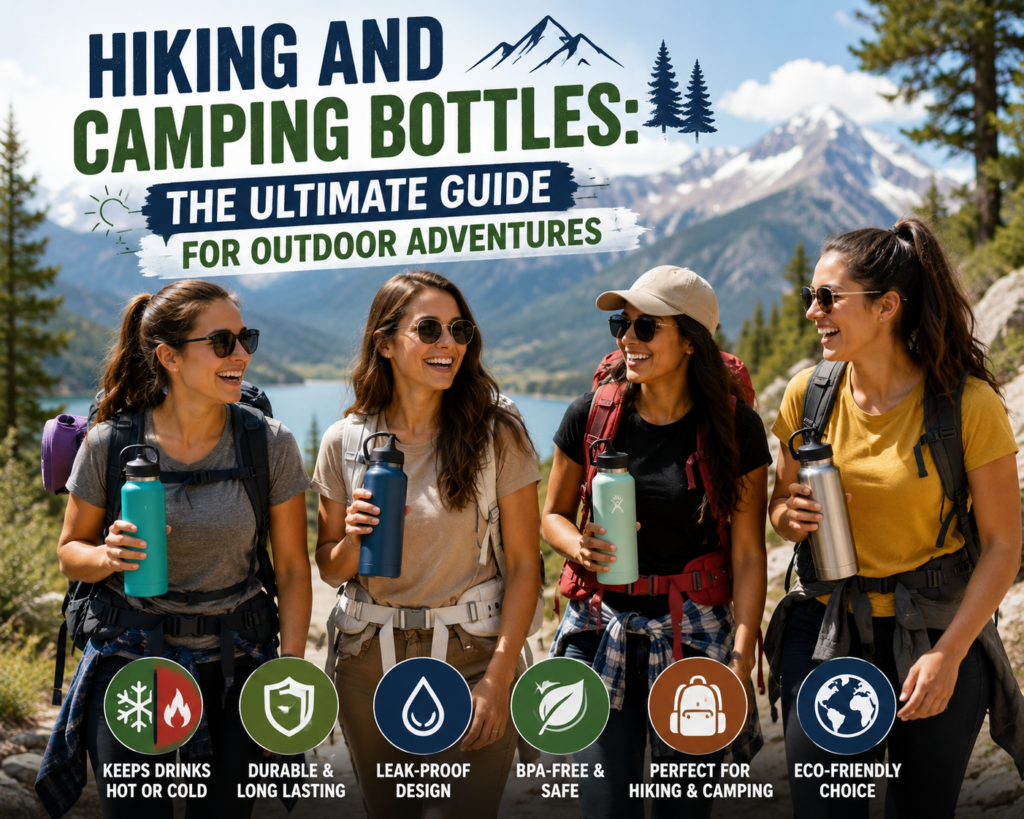
Why a Quality Hiking and Camping Bottle Matters
Unlike ordinary water bottles, hiking and camping bottles are designed to withstand harsh outdoor conditions. They are built with durable materials, leak-proof lids, and insulation that keeps beverages cold or hot for long periods.
A quality bottle offers:
- Reliable hydration
- Long-lasting durability
- Better temperature control
- Reduced plastic waste
- Safe drinking water on the trail
Whether you’re planning a short day hike or a multi-day backpacking trip, investing in a dependable bottle can significantly improve your outdoor experience.
Types of Hiking and Camping Bottles
Stainless Steel Bottles
Stainless steel bottles are among the most popular choices for hikers.
Benefits
- Extremely durable
- Rust-resistant
- Odor-resistant
- Excellent insulation
- Eco-friendly
These bottles are perfect for both hot coffee during chilly mornings and ice-cold water during summer hikes.
Plastic Bottles
Modern BPA-free plastic bottles are lightweight and affordable.
Best For
- Day hikes
- Kids
- Casual campers
- Budget-conscious travelers
While plastic bottles are lightweight, they generally don’t maintain temperature as well as insulated options.
Vacuum Insulated Bottles
Double-wall vacuum insulation maintence beverages at the desired temperature for hours.
Typical performance includes:
- Cold drinks: 24–48 hours
- Hot drinks: 12–24 hours
These are excellent for long camping trips where access to fresh water may be limited.
Collapsible Bottles
Flexible bottles save space after drinking.
Ideal for:
- Backpacking
- Trail running
- Minimalist travelers
However, they typically provide little or no insulation.
Key Features to Look For
Leak-Proof Design
A quality outdoor bottle should never leak inside your backpack.
So it is better to Look for:
- Secure threaded lids
- Silicone seals
- Locking caps
Insulation
Vacuum insulation helps maintain drink temperature regardless of weather conditions.
Benefits include:
- Cold water on hot days
- Hot coffee during winter hikes
- Less condensation
Lightweight Construction
Every ounce matters when carrying gear for miles.
Lightweight bottles reduce backpack weight while maintaining adequate capacity.
Wide Mouth Opening
Wide-mouth bottles offer several advantages:
- Easier cleaning
- Faster filling
- Ice cube compatibility
- Better compatibility with water filters
Carry Handle
Many hiking bottles include:
- Built-in handles
- Loop caps
- Carabiner attachment points
These features make carrying the bottle much more convenient.
Pros of Hiking and Camping Bottles
Excellent Durability
Outdoor bottles are built to survive:
- Drops
- Rocks
- Rough trails
- Backpack transport
Many stainless steel bottles last for years.
Environmentally Friendly
Using a reusable bottle helps reduce single-use plastic waste while supporting sustainable outdoor recreation.
Better Hydration
Having cold, fresh water readily available encourages hikers to drink more frequently.
Proper hydration improves:
- Energy
- Endurance
- Mental focus
- Recovery
Temperature Retention
Premium insulated bottles keep beverages cold or hot for many hours.
This is especially valuable during extreme weather.
Cost Savings
Although reusable bottles cost more initially, they save money over time because it eliminats the need for bottled water.
Cons of Hiking and Camping Bottles
Higher Initial Cost
Premium insulated bottles typically cost more than standard plastic bottles.
However, their durability often offsets the higher purchase price.
Heavier Weight
Stainless steel insulated bottles weigh more than plastic alternatives.
Backpackers covering long distances may prefer ultralight options.
Cleaning Requirements
Wide-mouth bottles are easier to clean, but narrow-mouth bottles and straw lids are deficult to claen as they require specialized brushes.
Regular cleaning is necessary to prevent bacteria and odors.
Limited Capacity
Smaller bottles may require frequent refilling during long hikes.
Some adventurers prefer carrying two bottles or pairing one with a hydration reservoir.
Best Materials for Outdoor Bottles
Stainless Steel
Best overall for:
- Camping
- Hiking
- Travel
- Hot and cold beverages
BPA-Free Tritan Plastic
Ideal for:
- Lightweight travel
- Kids
- Budget buyers
Aluminum
Lightweight but may dent more easily than stainless steel.
Often includes interior coatings to protect water quality.
Silicone
Excellent for collapsible travel bottles.
Perfect for saving backpack space after drinking.
Choosing the Right Size
Selecting the right capacity depends on your activity.
18–24 oz
Ideal for:
- Short hikes
- Gym workouts
- Daily commuting
32 oz
Perfect for:
- Day hikes
- Camping
- Outdoor works
40 oz+
Recommended for:
- Long hikes
- Remote camping
- Multi-hour adventures
Maintenance Tips
To maximize the life of your bottle:
- Wash after every trip.
- Clean lids and seals thoroughly.
- Allow all parts to dry completely.
- Avoid storing sugary beverages for extended periods.
- Follow manufacturer cleaning instructions.
Regular maintenance keeps your bottle odor-free and hygienic.
Frequently Asked Questions
Are insulated bottles worth it?
Yes. They provide excellent temperature retention and are especially useful for long outdoor adventures.
Is stainless steel better than plastic?
For durability, insulation, and longevity, stainless steel generally performs better.
Plastic remains a good choice for lightweight hiking.
Can I put coffee in an insulated bottle?
Absolutely.
Vacuum-insulated bottles are designed to keep coffee hot for many hours.
How much water should I carry while hiking?
A general recommendation is approximately 0.5–1 liter of water per hour, depending on weather, terrain, and activity level.
Final Verdict
A high-quality hiking and camping bottle is one of the most valuable pieces of outdoor gear you can own. Whether you prefer lightweight plastic, durable stainless steel, or premium vacuum insulation, choosing the right bottle ensures you stay hydrated, comfortable, and prepared for every adventure.
While insulated stainless steel bottles are heavier and more expensive, their durability, temperature retention, and long lifespan make them an excellent investment for serious hikers and campers. For casual outdoor enthusiasts, BPA-free plastic or collapsible bottles may offer the ideal balance of affordability and convenience.